



Sensory Circuits
What is a Sensory Circuit?
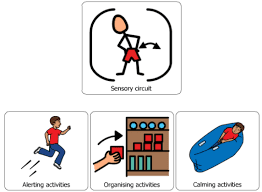
A sensory circuit is a form of sensory integration intervention. It involves a sequence of physical activities that are designed to alert, organise and calm the child. The sensory circuit aims to facilitate sensory processing to help children regulate and organise their senses in order to achieve the ‘just right’ or optimum level of alertness required for effective learning. The circuit should be an active, physical and fun activity that children enjoy doing.
Sensory circuits are a great way to both energise and settle children so they can focus and engage better in the classroom. Many children can benefit from attending a sensory circuit, even for a short period of time. The activities can also be utilised at different times of the day as part of a sensory diet to help the child regulate.
Sensory circuits are designed to start with alerting activities, move to an organising phase and then finally to a calming phase. Doing the activities in the recommended order is vital. The right order results in a well-regulated, happy child. The wrong order may well result in a dysregulated, upset or irritable child and have the opposite effect.
We hold a session of sensory circuits in the morning before school – starting at 8.30am till 8.50am.
Approximately 10 – 15 minutes.
We have fortnightly Inclusion Team Reviews (ITR), where we identify children that we believe would benefit from such an intervention.
Please make contact with your child’s class teacher so that your child can be added to the list of children discussed at the next ITR.
Circle of Friends
What is Circle of Friends?
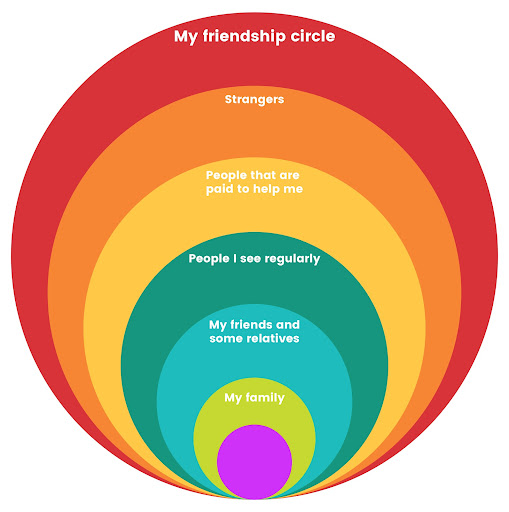
The ‘Circle of Friends’ intervention is aimed primarily at improving the inclusion of children with challenging behaviour, SEN or personal concerns within mainstream schools. It works by gathering the student’s peers in a circle of friendly support to help the young person with their problem solving.
We hold sessions of Circle of Friends at times that are the least disruptive to our children, so either before school starts, just before lunch or just before the end of the day.
Approximately 20 – 30 minutes.
We have fortnightly Inclusion Team Reviews (ITR), where we identify children that we believe would benefit from such an intervention.
Please make contact with your child’s class teacher so that your child can be added to the list of children discussed at the next ITR.

Drawing and Talking
What is Drawing and Talking Therapy?
Drawing and Talking is a therapeutic intervention for children and adults. It is designed as a short-term proactive intervention intended to complement, rather than replace, the work of Specialist Mental Health Services.
Through a 12-week cycle of sessions this non-intrusive tool allows children and young people to bring what they need to their sessions. Utilising drawing as a way to help them express their feelings differently in ordinary verbal language. The Drawing and Talking therapeutic approach allows individuals to discover and communicate emotions through a non-directed technique. This is what sets Drawing and Talking apart from existing solution-focused and cognitive based therapies and interventions.
We hold sessions of Drawing and Talking at times that are the least disruptive to our children, so either before school starts, just before lunch or just before the end of the day.
Approximately 30 minutes.
We have fortnightly Inclusion Team Reviews (ITR), where we identify children that we believe would benefit from such an intervention.
Please make contact with your child’s class teacher so that your child can be added to the list of children discussed at the next ITR.
What external support can my child/family get at LAPW?
Early Help – provides services that can be accessed at a time and place that suits families to help them to do well, stay safe and resolve problems at the earliest possible opportunity, before they become more serious.
Dandelion Time – a nature-based charity that gives early support to children who’ve suffered from traumatic experiences such as domestic abuse and neglect. We help them overcome their emotional and behavioural issues to build self-esteem and confidence, and cope better at home, at school and in life.